

Four Remarkable Construction Projects in Spain.
What are the Lessons for Developers
MDCI are proud to be based in Spain, and offer our clients a unique combination of Northern European work ethics, reliable communication in English and seamless integration with local construction methodologies for construction projects.
Spain has a rich history of construction and architecture, dating back over 3,000 years to inspire us and drive us to put in the hard work to ensure modern construction projects are completed successfully. MDCI are a safe pair of hands to guide you through the process of building projects in Spain, with 27 years of project management experience and membership of RICS.
The completion of the central tower of the Sagrada Familia this year was a real milestone, and a testament to Spain’s architectural pedigree and ambition, and so in this article, we want to celebrate four exceptional construction projects in Spain, our home country, and share lessons that developers can learn from these iconic projects.
If you’re ready to start planning your construction project, or property development in Spain, we hope this will inspire you. Remember that MDCI are here to support you from conception to completion with exceptional professional project management, to ensure that your construction project goes down in history for all the right reasons!
Sagrada Família, Barcelona – A Masterclass in Long-Term Project Management
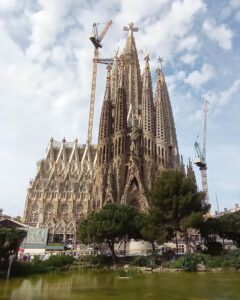
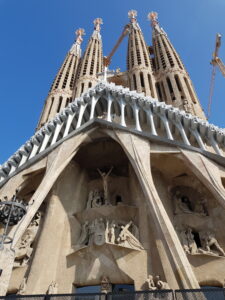
We have to start with the Sagrada Familia in Barcelona, which at long last was revealed in all its true glory this year. On the centenary of Gaudi’s death, the central Tower of Jesus Christ reached completion and was illuminated for the first time – a real milestone. This extraordinary construction project has been in progress for over 140 years and is expected to be finally completed in 2030!
Sagrada Familia is a great project management story. The fact that the project has continued to be worked on over generations, despite Gaudi dying in 1926, when only the crypt, the apse walls, one portal, and a single bell tower on the Nativity Façade were complete, is truly amazing.
It’s testament to some serious grit, determination and project management expertise, as it has certainly not been an easy project! Here are just a few of the challenges that the project has had to overcome.
During the Spanish Civil War, anarchists broke into Gaudí’s workshop, destroying his original plaster models, drawings, and plans. It took subsequent architects over a decade simply to reconstruct the shattered 3D models to understand how to proceed.
It was built without a permit, and like all building projects, it had to pay for contravening the regulations! In 2018, city authorities discovered the Sagrada Família had been building illegally without a permit since 1885. The foundation was forced to pay €36 million over a decade to fund city transport and infrastructure to legalize the site.
There have been protests against new sculptures added in the 1980s, legal battles against the requirement to demolish residential buildings to complete the final entrance and much more. Due to the length of the project, there was a succession of chief architects handing over the baton to continue the work, using Gaudí’s surviving structural rules and reconstructed plaster models. And yet, despite all the odds, in February 2026, the tallest tower was finally completed.
Today it is the most visited monument in Spain and ticket sales fund the continuation of the construction project. Ticket sales bring in around €100 million per year, which clearly demonstrates the lasting value of ambitious architectural projects like these. It also shows how the vision of a talented architect can capture the hearts and minds of so many, and with the right funding model and backing from authorities and locals alike, builders, craftsmen and project managers can bring the vision of our finest minds to life.
Hospital del Mar, Barcelona – Managing Complex Construction in an Operational Building
This award-winning hospital project was completed in 2025, despite a lot of challenges. It is a 27,286 m² expansion of the existing hospital by PINEARQ and Brullet-De Luna Arquitectes. It caught our attention for the complexity involved with constructing a major new building while the existing hospital remained fully operational. The team also had to deal with just a single access point onto site, a water table around eight metres below ground and a redesign half way through the project due to funding. You can find out more in ArchDaily.
The project won recognition in the 2026 Catalunya Construction Awards for its construction management/execution, with the jury highlighting the team’s ability to adapt to strategic changes during construction.
We really appreciate the fact that the management of the project was particularly praised in this case. We know that complex projects like these rarely proceed exactly according to the original plan and how important it is to the successful delivery of the project that there’s experienced project management throughout the planning, construction and completion of the building. It’s great to see this being recognized.
Roig Arena, Valencia – Creating Value Beyond the Building

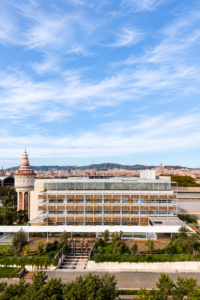
This massive structure is currently Spain’s largest indoor venue and was privately funded by the president of the Mercadona Supermarket chain. Costing €400 million, this vast structure caters to large sporting events and concerts and means that Valencia can now attract premier international tours and major sporting events that previously bypassed the city for Madrid or Barcelona.
Its architecture relies heavily on local Valencian ceramics and this design choice supported regional supply chains and minimized the environmental footprint associated with transporting materials. In 2026 it won top prize in the Stadiums & Arenas category at the A+Awards. The organizers explained that “this award places Roig Arena on the international map of contemporary architecture and recognizes its ability to integrate sport, culture and technology within a versatile urban infrastructure, deeply connected to the city of Valencia.”
The arena is estimated to generate an economic impact of €150 million annually for the city of Valencia. The project was not just about the building itself; it included the development of Roig Arena Park, a 47,000 m² urban landscaping project that integrates natural green spaces seamlessly into the surrounding neighbourhood.
We love this project, as it clearly shows that a successful development isn’t necessarily just about the building. It’s about creating a destination that generates activity and value around it and this doesn’t always have to be publicly funded.
Hortensia Herrero Art Centre, Valencia -Transforming Historic Buildings
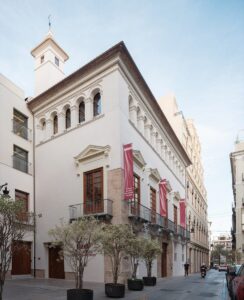
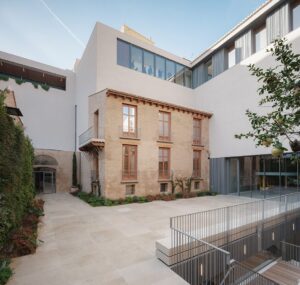
The final project we want to focus on is the restoration and redevelopment of a severely deteriorated 17th-century Baroque palace to become a contemporary art centre. Opened at the end of 2023, the Centro de Arte Hortensia Herrero project took more than five years and cost around €40 million.
The complex consists of two main spaces: the historic palace on Calle del Mar and a secondary building on San Cristóbal Street, where the original façade and sloping roof were maintained. These two spaces are united by a modern bridge structure set within a landscaped courtyard.
There were many challenges to overcome during this project, but the architects and project management team handled them expertly and it’s a great example of a well-planned and executed restoration project.
When acquired, the Valeriola Palace was in a severely dilapidated state. The initial phase required an extensive and delicate restoration, just to save and secure the historical structure, and recover original heritage elements like the interior stone courtyard staircase.
During excavations for the project, the remains of Valencia’s ancient Roman circus were uncovered. The architectural plan had to be adapted to preserve these ruins, integrating them into a newly designed basement so that the public could visit them. This required coordination among a multidisciplinary team of architects, archaeologists, restorers, and craftsmen.
A primary challenge cited by the architects was creating a seamless, natural route for visitors across two very different historical footprints. To solve this, the team designed a continuous, one-way flow: visitors ascend through the Valeriola Palace, cross the newly built courtyard bridge, and descend through the San Cristóbal building, ensuring a comfortable visitor experience.
This project shows us that sometimes the most valuable development opportunity is the transformation of an existing building. By using modern technology and vision to bring historic architecture back to life and become a relevant space for contemporary use, developers can create a cultural destination and play an important role in preserving historic buildings, and the history of a destination.
Inspired by Spain’s Remarkable Construction Projects?
What These Construction Projects in Spain Teach Property Developers
These four remarkable projects demonstrate that successful construction and development in Spain require more than an ambitious vision. They demand careful planning, experienced project management, adaptability and the ability to overcome unexpected challenges. Whether managing complex construction works, transforming historic buildings or creating developments that benefit the wider community, the right expertise is essential to achieving lasting success. For developers planning their own projects in Spain, these examples highlight the value of working with experienced professionals who understand both the local construction environment and the importance of delivering projects from conception to completion.
MDCI’s History of Project Management and Construction in Spain dates back over 60 years
It’s not just Spain that has a long history of construction, so does our Founder and CEO Mark Lawson!
Mark moved from the UK to Nerja on the Costa del Sol with his family in 1964. Aged just 5 years old, he got a taste of his first construction project, when he accompanied his parents to live in the sun and build and run a small hotel. He remembers well the challenges his Dad faced buying a plot of land and building, and this has shaped his whole career and was crucial to the founding of MDCI in 1999 – read Mark’s full story.